
Argentina. Chile. Two huge fascinating countries stretching from the cold and rough Tierra del Fuego (Land of fire) in the South where the world’s southernmost towns are located and where you can hop on a cruise to Antarctica, to subtropical rainforest and deserts in the North.
There is so much to see in this part of South America. What to choose?
The breathtaking Iguazú waterfalls, majestic Andes, Chilean fjords, icebergs that are part of the third largest iceberg field in the world, Eastern Island, the extensive Atacama Desert, enormous wine regions in Argentina, Buenos Aires – which is in my opinion, together with Rio de Janeiro, one of the coolest cities in South America…
Well, this trip can be difficult to plan 🙂 But worth the effort. Very much so…
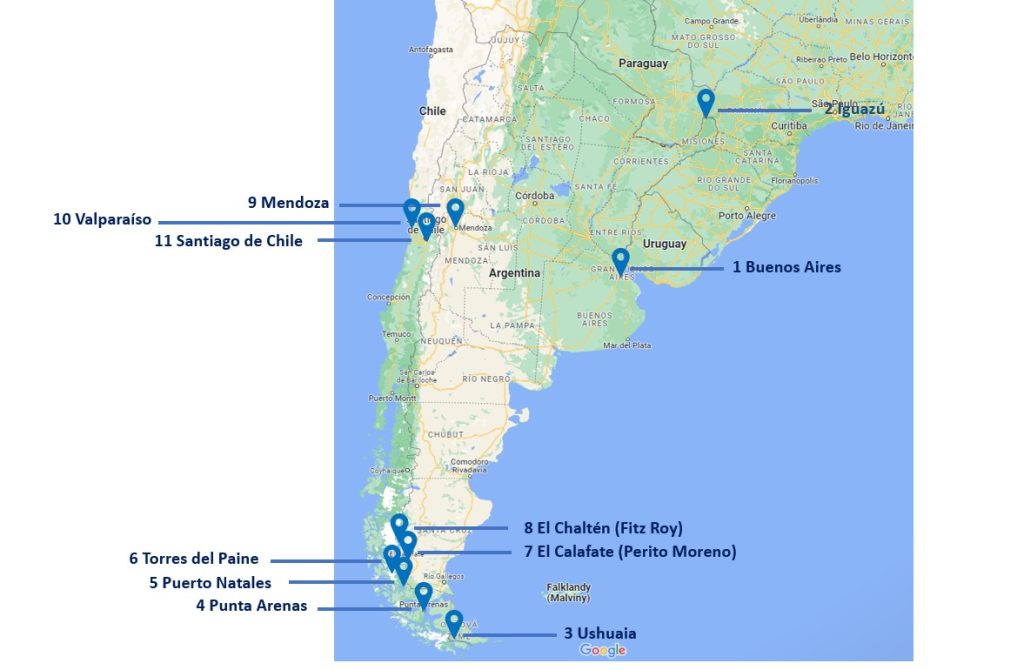
On the map you can see the list of the places my husband Jan and I visited during our Argentina-Chile trip in March-April 2023 in chronological order.
For our transfers, we used mostly plane and bus, depending on distance.
Below, I will fill you in on how exactly we travelled and what exactly we saw with recommendations on where to buy tickets, what to be careful of, where to stay and other practical information.
Hopefully some of our tips will be handy for other wanderers 🙂
From Buenos Aires to Puerto Iguazú


We started our Argentina-Chile trip in Buenos Aires from where we took a flight to Puerto Iguazú to explore the famous Iguazú waterfalls. You can approach the Iguazú waterfalls from both the Argentina side (the town of Puerto Iguazú) and the Brazil side (the town of Foz do Iguaçu), however, flying from Buenos Aires, the Puerto Iguazú option will probably be more economical. Furthermore, the bigger part of the falls is in Argentina, so you will probably want to spend more time on the Argentinian side.
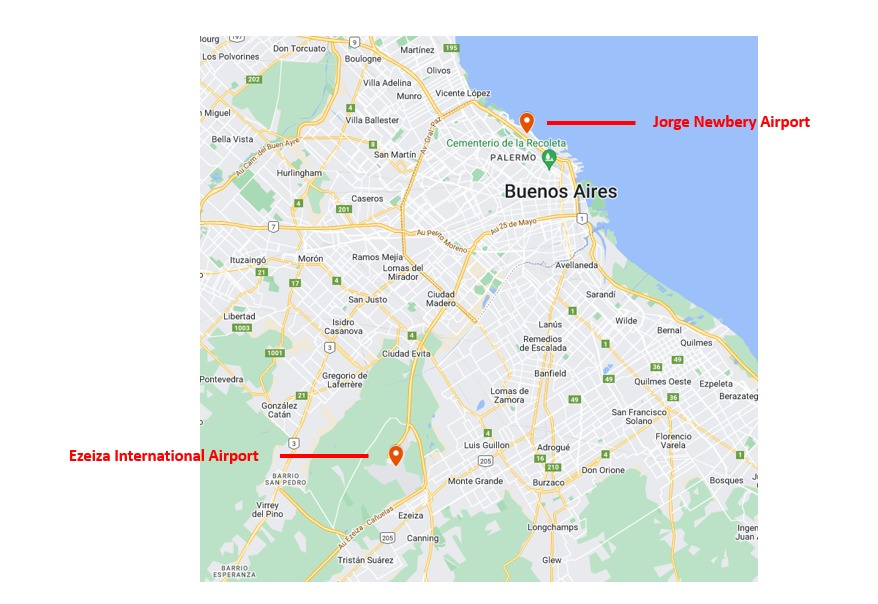
It might be important to mention that for domestic flights, the Jorge Newbery Airport (Aeroparque) in Buenos Aires is used. The airport is located a few minutes from the city center (and hip Palermo neighborhood) and hence it might be easy to do a little visit to this amazing vibrant city even when you are short on time, or it was not the most important item on your itinerary. Uber operates in Buenos Aires and our drive to the airport from Avenida Florida cost us only 5 euros and 20 minutes!
If you have just arrived in Buenos Aires after an international flight and plan to immediately continue with a domestic flight, bear in mind that you might be in the Ministro Pistarini Airport (Ezeiza) and you need to switch airports. Apart from the above mentioned Uber, to get to the Jorge Newbery Airport from Ezeiza, you can take a taxi (they are waiting in front of the airport, but it is much cheaper to order one at the information kiosk inside the airport), or to book a bus with the Tienda León bus company
https://www.tiendaleon.com/index.phproute=product/product&path=1&product_id=4
According to my research, there are not any public buses operating this route.
From Puerto Iguazú to Iguazú Waterfalls


The Iguazú waterfalls are located at the border between Argentina and Brazil, and you can visit them from both sides (there are national parks on each side). To get to the waterfalls on both sides using Puerto Iguazú as the starting point is quite easy. Bellow I will describe how exactly we travelled from Puerto Iguazú to the waterfalls and elaborate on how the park visit typically looks like.

HOW TO GET TO THE WATERFALLS?
For the Argentinian side, we took the bus from the Bus Terminal in Puerto Iguazú. The main company operating the route is Río Uruguay. The journey lasts around half an hour and costs around a dollar or two (with the current inflation in Argentina, it is difficult to state the exact current price). The buses pass every 20 minutes from early morning until evening (around 8 pm), so we just bought the ticket at the station and waited in line for the next bus to come. On the way back we took the same bus; they pass every 20 minutes from the bus stop which is directly at the entrance (exit) to the park.
To get to the Brazilian side, it is also possible to take the Río Uruguay bus from the Puerto Iguazú Bus Terminal. They are operated a bit less frequently (when we were there in spring 2023 it was every hour between 8.30 am and 2.30 pm). The journey lasts around one hour (with a little time spent at border control). The cost is 2-3 USD.
(We decided not to take the bus to Brazil but to hire a taxi because we intended to visit not only the waterfalls, but also the Itaipú dam):
For more information click here.
The tickets to the national parks on both sides can be bought directly at the entrance to the parks. The price was around 18 USD on both sides and waiting time in line for tickets almost zero.
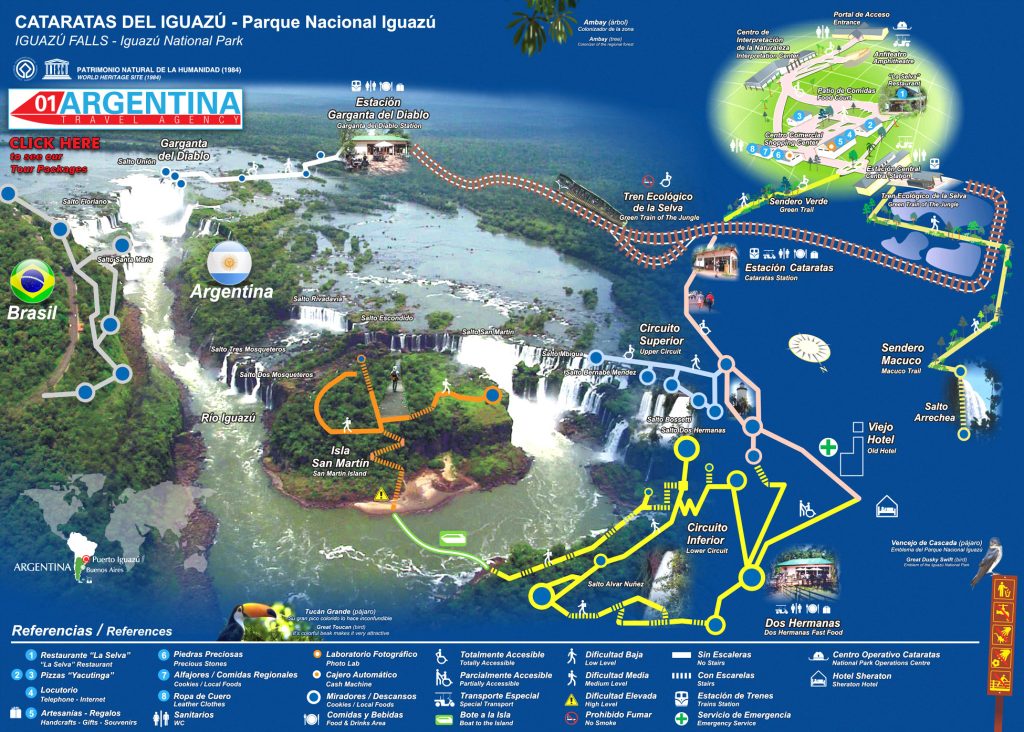
In Argentina, after entering the park you will need to get on a little train that will take you to Garganta del Diablo (Devil’s throat) or Circuits. In Brazil you need to hop on a bus, which will drive you to the beginning of the trail in front of Hotel Iguazú. Both the train and bus are included in the park ticket price, and it is easy to spot them after entering the park. In Argentina, park employees will give you boarding passes so do not ignore people looking like hostesses approaching you. As well as handing over the boarding passes, they will explain to you how the park works and give you a document with an itinerary suggested for you – when you should visit individual circuits and when the train departures are.
HOW MUCH TIME IS NEEDED FOR THE VISIT?
For Argentina, at least one day. The park is divided into three basic parts: Garganta del Diablo, Upper Circuit and Lower Circuit. Each part takes approximately one hour (depending on how quick you are) and it would be pity to miss any of them. You can also take a cruise to approach Garganta del Diablo and Isla San Martín – it is possible to buy the ticket in the park directly.
Be aware that entering the park and embarking the train is not a quick thing so expect to lose some time there. We arrived at the bus terminal in Puerto Iguazú slightly after 9.30 am and boarded the train to Garganta del Diablo after 11.30 am. Yeah, you can feel the Latin American “no rush” culture here :). Moreover, you will be dependent on train departures (at least the one taking you from Garganta del Diablo and the one taking you to the park exit after your visit).
For Brazil, you need a half day. There is one trail of approximately one hour taking you to the bottom of Garganta del Diablo where you can enjoy breathtaking views. Directly from Garganta, there is an elevator which will take you to the parking lot from where you can get on the park bus.
In both parks, it is possible to buy a simple buffet lunch (just watch out for monkeys and birds :))
PS: It is not possible to walk from one park to the other and save your time this way. You need to enter them separately.
DO I NEED TO VISIT BOTH ARGENTINIAN AND BRAZILIAN SIDE?
YES! Both are beautiful.
Only 20% of the waterfalls are located in Brazil, but you will get a fascinating view to Garganta del Diablo from the bottom. It is one of the most amazing things I have ever seen.
80% is located in Argentina and you can get a look into Garganta del Diablo from the top, which is mesmerizing, and you can see the waterfalls from more angles.
From Puerto Iguazú to Ushuaia


From Puerto Iguazú we took a flight to Ushuaia with a transfer in Buenos Aires. From the Ushuaia airport to the town, we used one of the taxis waiting in front of the airport.
For tips on trips around Ushuaia click here
For accommodation, we can really recommend the MIL810 Ushuaia Hotel. The rooms have a nice Nordic design and are very warm and cozy, and the restaurant with huge windows and an entrance to its terrace offers amazing views over the Beagle Canal and Ushuaia.

From Ushuaia to Punta Arenas
You can fly to Punta Arenas from Ushuaia, however, if you have spare time and would like to save money, you can travel by bus. The trip will last approximately 11 hours and is operated by four companies. We took Bus Sur as we did many times while travelling in Chile and we can recommend it.
You can book the ticket here.
https://www.bussur.com/frecuencias-internacionales/
Keep in mind that its summer schedule differs from its winter schedule and buses don’t operate every day, so don’t forget to book your trip in advance (the same is valid for the rest of the route operators too, not only Bus Sur). Specific information is maintained on the website of the bus company.
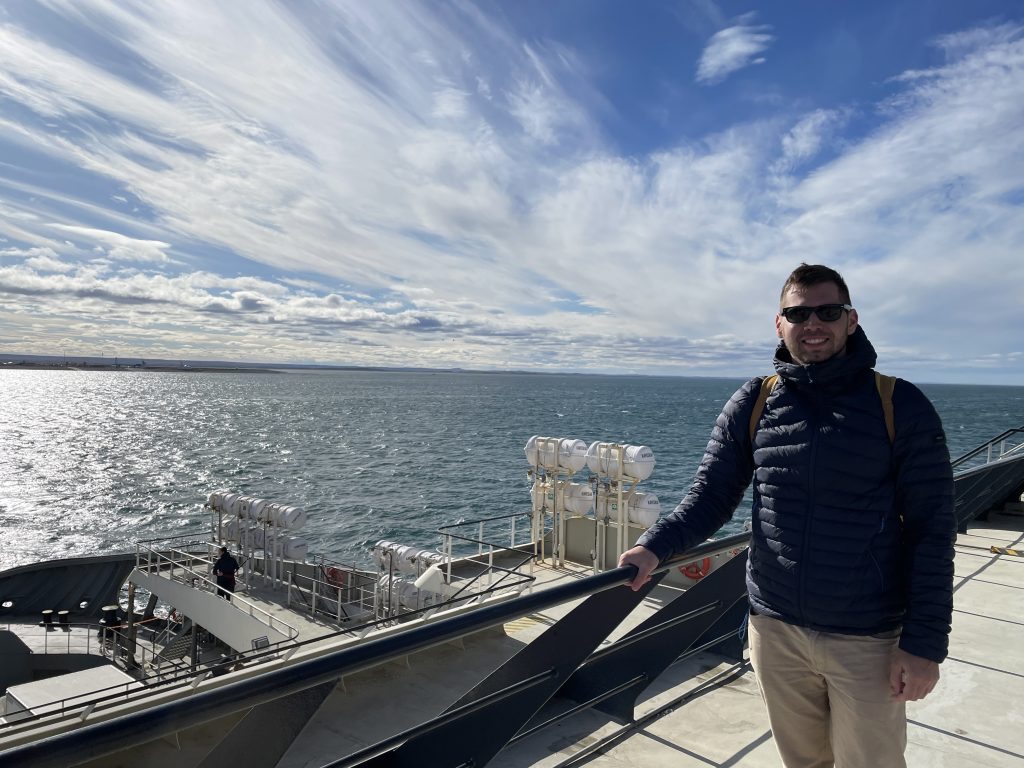
If you would like to take the bus because of the views, do not expect much, most of the trip goes through the Pampas. However, you can still see many llamas and nandus (pampa ostrich). As the highlight of the trip, before Punta Arenas (in Porvenir) the bus will get on a ferry to cross the Magellan Straits from where you can get nice views. On the ferry you can get free wi-fi.
Also note that at the border with Chile you need to get off the bus and pass border control which includes luggage scanning. In comparison with the border control while travelling from Mendoza to Santiago, this one is much quicker.
From Punta Arenas to Puerto Natales

The easiest way to travel from Punta Arenas to Puerto Natales is by taking a bus. The trip lasts for 3 hours and 15 minutes. We took Bus Sur.
Bus Sur operates several bus lines every day, depending on the summer and winter season.
High Season (September to April) 07:00 – 08:30 – 10:00 – 11:00 – 12:30 – 14:00 – 15:00 – 17:00 – 18:00 – 19:00 – 21:00 Hrs.
Low Season (May to August) 07:00 – 10:00 – 12:30 – 15:00 – 17:00 – 18:00 – 19:00 hrs.
https://www.bussur.com/frecuencias-nacionales/
From Puerto Natales to Torres del Paine

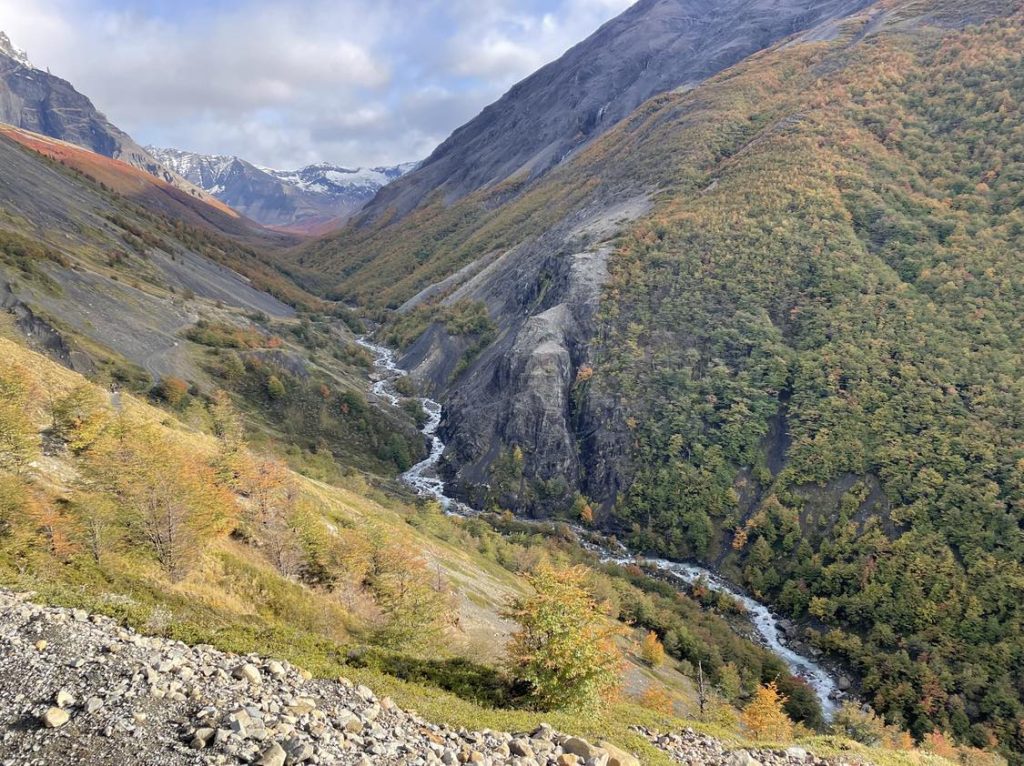
If not travelling by car, probably the easiest way to get to Torres del Paine is by taking a bus from Puerto Natales.
There are multiple bus lines operated by Bus Sur from Puerto Natales to Torres del Paine.
We also spotted multiple buses from Buses Gomez in the park:
The first stop you will reach in Torres del Paine is Laguna Amarga – Centro del Bienvenida (Visitors’ Center). There, rangers will check your ticket, which you can get online here:
More specific information on bus schedules and bus stops in Torres del Paine can be found here. In this link, you can see a map of the park with all the park bus stops and exact times from where and in which directions the buses leave:
https://www.bussur.com/torres-del-paine/
Since planning a stay in Torres del Paine is not a simple task, I am adding an article where I describe where we stayed and what we did:
Torres del Paine
PS: We didn´t do W trek but three individual trips.
From Puerto Natales to El Calafate
There is no direct connection from Torres del Paine national park to El Calafate in Argentina. To travel to El Calafate, it is necessary to first go to Puerto Natales and take a bus to El Calafate from there. We took Bus Sur again, the journey took five hours.
https://www.bussur.com/frecuencias-internacionales/
From El Calafate to Perito Moreno
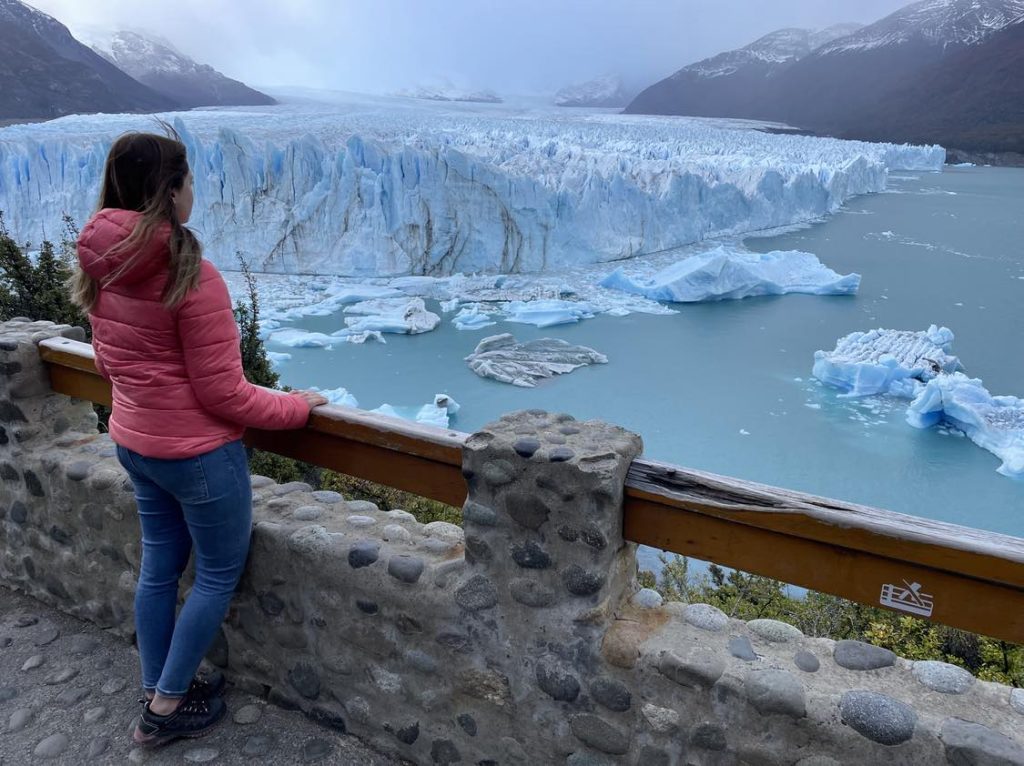
Perito Moreno Glacier is located one hour and 15 minutes’ drive from the El Calafate terminal. You can get there easily by bus. You can buy the ticket at the station but since there are not that many connections in one day, we recommend buying it in advance online.
You can order your bus ticket here:
https://taqsa.centraldepasajes.com.ar/servicios.aspx
You will need to pay an entrance fee to the park (Parque Nacional Los Glaciares). If you have cash, you can do it directly in the bus after arriving to the park (in our case, employee of the park came to collect the money) or you can buy it in the park office with a credit card. The price is around 37 USD.
There is also the possibility to buy the tickets to the national park online via this link:
https://www.argentina.gob.ar/parquesnacionales/losglaciares/tarifas
On this website you can find more information as well on the whole Parque Nacional Los Glaciares and other national parks of Argentina.
The bus will take you directly to the glacier and the same bus will take you back to El Calafate approximately 3 hours later.
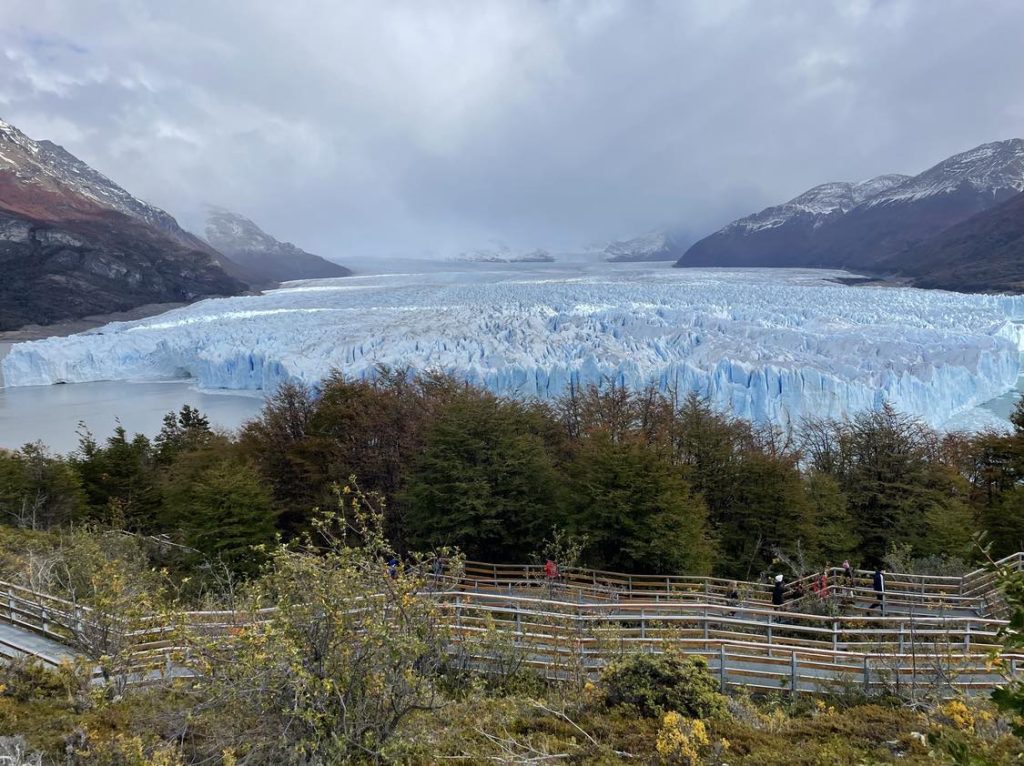
During that time you can enjoy the views on the glacier from the 4.5km circuit of tourist paths and viewpoints.
In addition, it is possible to get on a cruise to approach Perito Moreno; the tickets can be ordered online with different agencies, but we have seen many kiosks right on the spot, too.
Next to the glacier is a big visitor center where you can go to a restaurant and use the bathrooms.
From El Catalate to El Chaltén
When travelling from Chile by bus, to get to El Chaltén you need to switch the bus in El Calafate.
The main operating companies are Chalten Travel and Marga Taqsa. We travelled with Marga Taqsa and it was fine. The bus was quite empty, and it was sufficient to buy the ticket at the bus station. There are several connections operated between El Calafate and El Chaltén every day. The journey takes 3 hours 15 minutes.
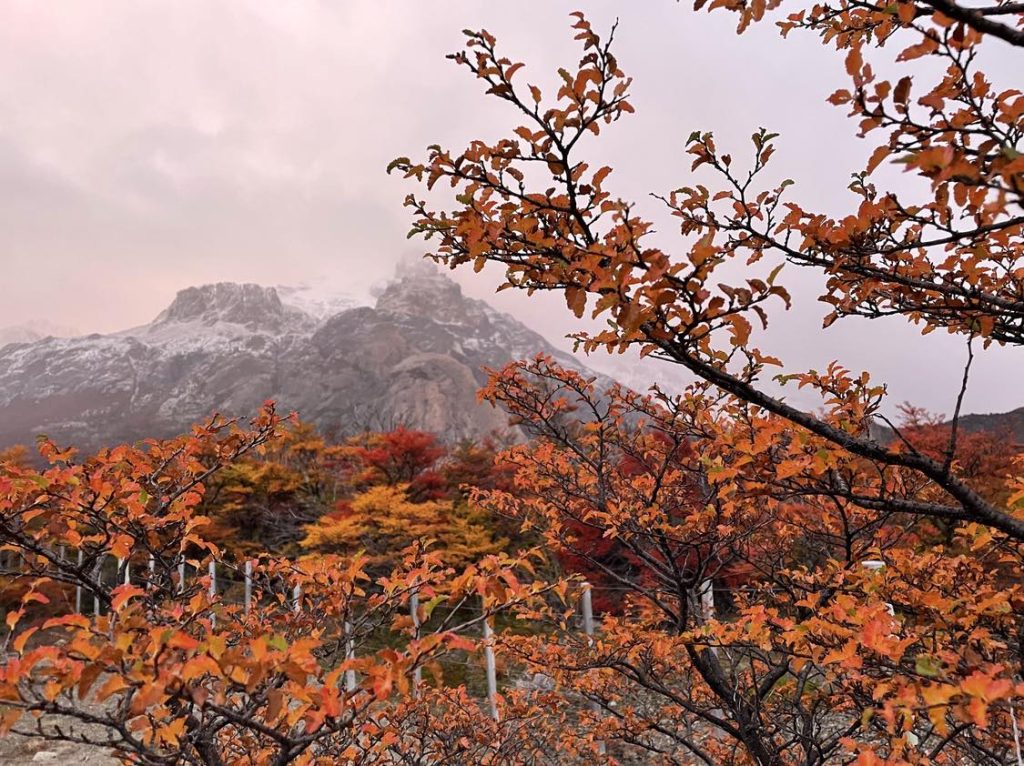
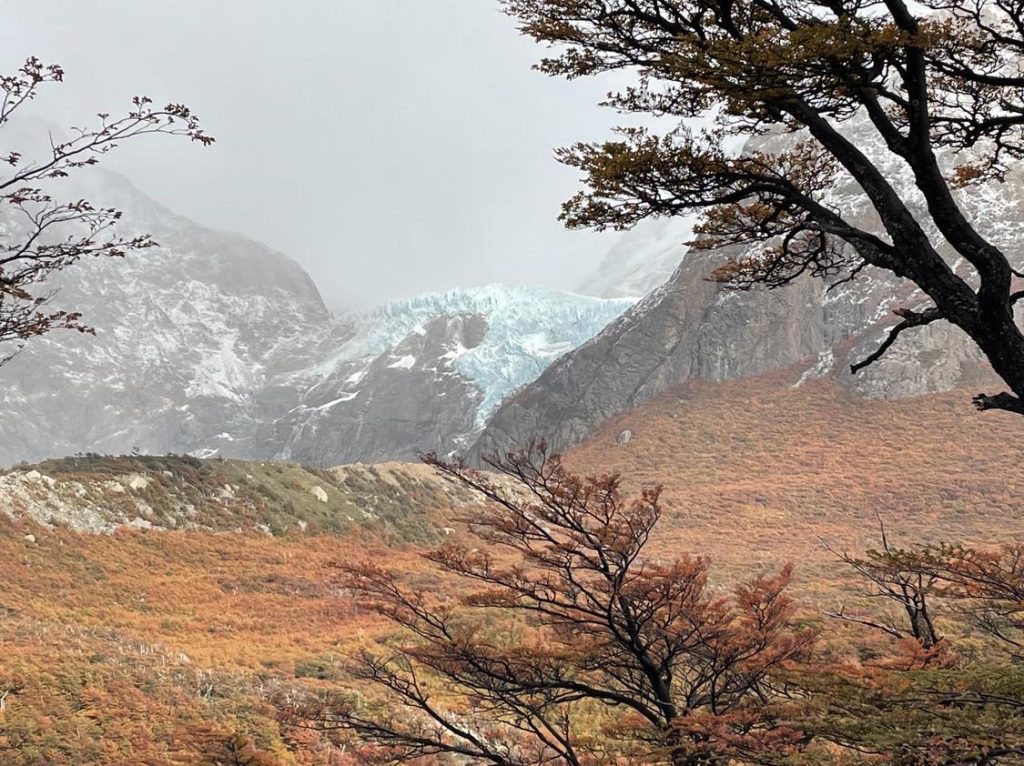
People mostly go to El Chaltén for the Mount Fitz Roy trek. The trail starts directly in the town, or you can take a taxi (around 30 minutes) to Río Eléctrico, so you can take a different trail up and down. The path from Rio Eléctrico will save you one hour of walking and is much less steep.
From El Calafate to Mendoza
Flight via Buenos Aires
From Mendoza to Santiago
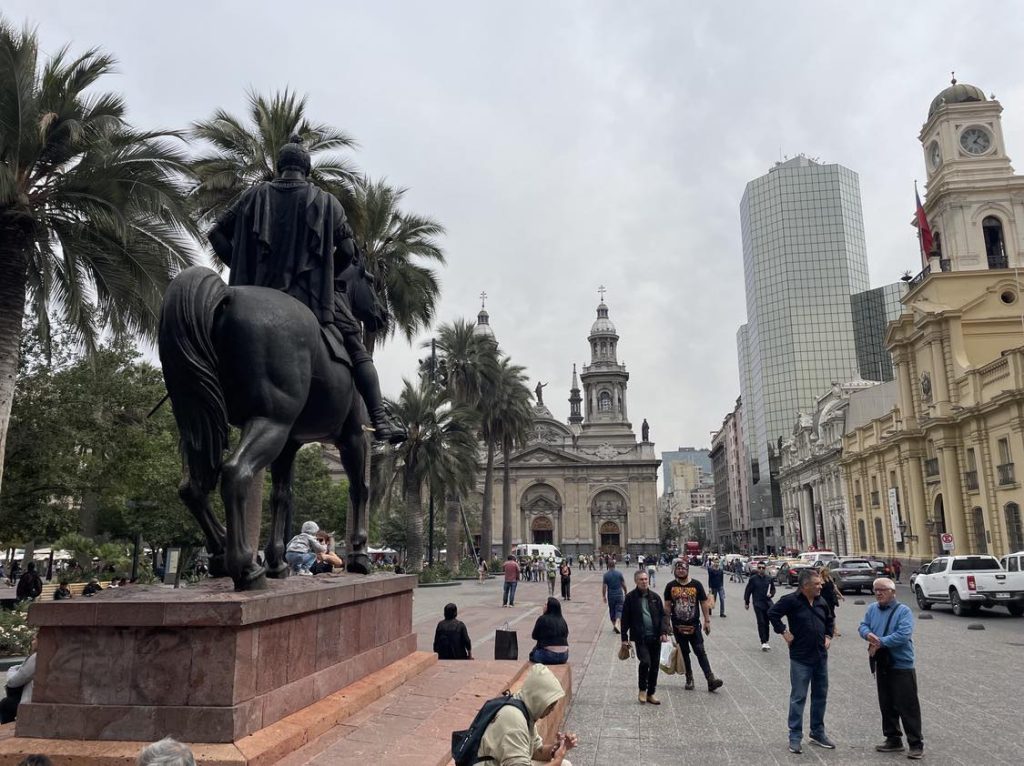
From Mendoza to Santiago, you can of course fly but you can also take a bus. The journey takes 7-8 hours and there are several companies operating this route.
CATA INTERNACIONAL operates three buses per day with a selection of different types of seats depending on the level of comfort.
https://pasajes.catainternacional.com/app/services
ANDESMAR runs four buses, and you can also select from various types of seats.
https://shop.andesmar.com/trips/oneway/type/1/f/710/t/996/d/2023-08-10/iR/0/l/en/p/1
The price is around 40 euro.
Note that at the border you need to pass border control, which can take quite a long time. We were waiting for around one hour. You need to get off the bus, have your passport checked and luggage scanned.
The route itself goes through the Andes so you can get some fascinating views, for me personally even scary, travelling at night and seeing how steep some roads on the route are.
From Santiago to Valparaíso
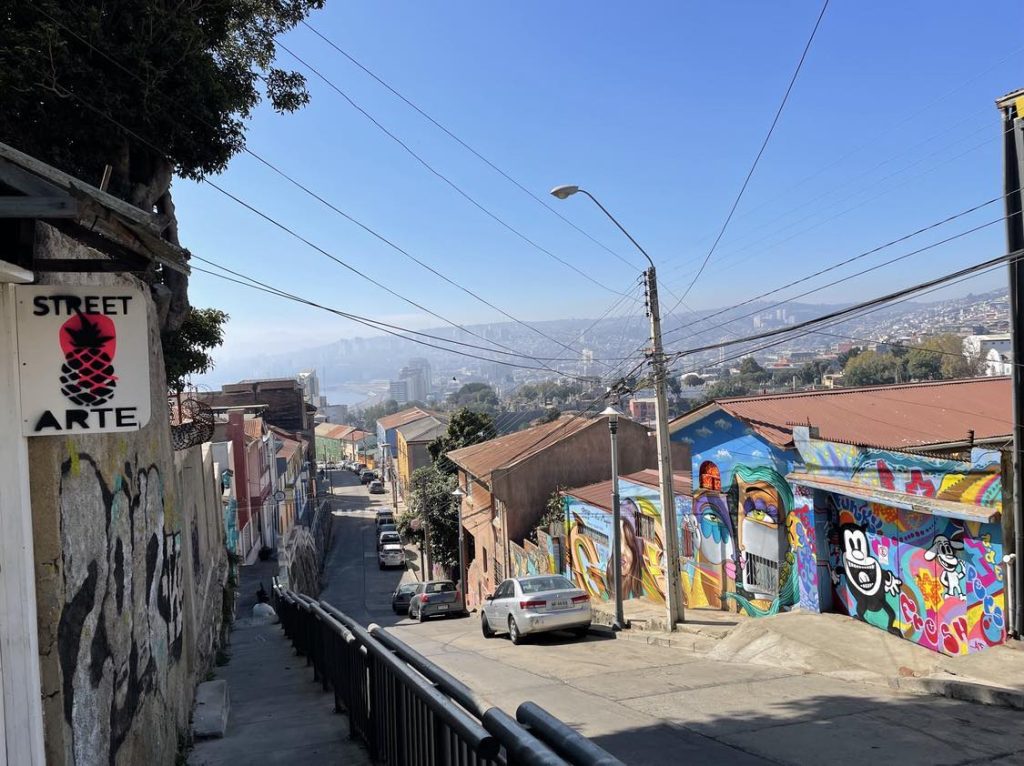
To get from Santiago to Valparaíso is an easy task. There are many buses passing from the Santiago terminal with intervals from 10 to 30 minutes. The journey takes 1 hour 40 minutes and you can buy your tickets directly at the station.